Selecting a Special Economic Zone (SEZ) is a strategic production decision, not simply a way to reduce customs costs. An office-oriented SEZ can attract technology exporters but offer little to a chemical processor that needs environmental infrastructure, heavy transport, and industrial water.
India’s SEZ framework operates under the SEZ Act, 2005 and its rules. The 2026 register confirms both public and private zones. Authorized operations receive specific customs and GST treatment. Crucially, the older Section 10AA income-tax holiday has a sunset restriction and is not an automatic benefit for newly established 2026 units.
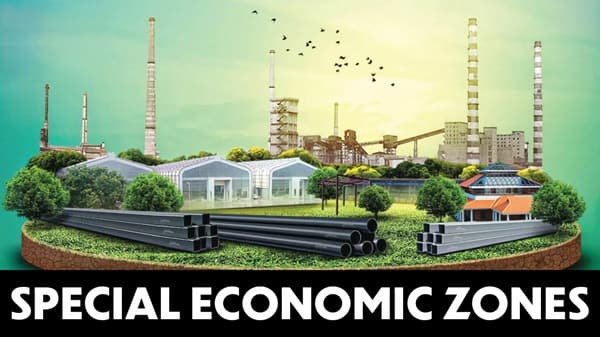
This guide profiles ten operating zones selected for distinct sector and logistical strengths. Prospective tenants must assess location, regulatory permissions, infrastructure readiness, lease terms, and export obligations before committing capital. Let’s check out the top 10 Special Economic Zones in India in 2026.
At-a-Glance Comparison
| No. | Special Economic Zone | Location | Primary Business Strength |
| 1 | Mundra Port and SEZ | Kutch, Gujarat | Integrated maritime logistics |
| 2 | SEEPZ SEZ | Mumbai, Maharashtra | Gems, jewellery and electronics |
| 3 | Kandla SEZ | Kandla, Gujarat | Multi-product export manufacturing |
| 4 | MEPZ SEZ | Chennai, Tamil Nadu | Engineering and diverse manufacturing |
| 5 | Noida SEZ | Noida, Uttar Pradesh | North India export access |
| 6 | Cochin SEZ | Kochi, Kerala | Multi-product manufacturing and services |
| 7 | Visakhapatnam SEZ | Visakhapatnam, Andhra Pradesh | East-coast industrial exports |
| 8 | Falta SEZ | Falta, West Bengal | Eastern manufacturing base |
| 9 | Mahindra World City SEZ | Chengalpattu, Tamil Nadu | Multi-sector industrial ecosystem |
| 10 | Dahej SEZ | Bharuch, Gujarat | Chemicals and process industry |
Detailed Profiles of the Top 10 SEZs
1. Mundra Port and Special Economic Zone: Port-Led Manufacturing
Mundra combines a notified, operational multi-product SEZ with access to Adani Ports’ large container and bulk-handling infrastructure in Gujarat. Its advantage is proximity between industrial units, warehouses, and maritime connections serving northern and western India. The port operator reported approximately 8.5 million TEUs handled during FY2025–26. That port statistic does not measure SEZ exports. Potential occupiers should verify berth connectivity, available plots, customs processes, utility charges, and environmental clearances before assuming that nearby shipping capacity will lower their total logistics costs.
2. SEEPZ: Jewellery and Electronics Near Mumbai
Santacruz Electronics Export Processing Zone, now SEEPZ SEZ, is a long-established export zone in Mumbai. The government’s operational register identifies electronics and gems and jewellery as core sectors. Proximity to Mumbai’s financial, supplier, and air-cargo networks supports high-value merchandise and specialized services. Companies benefit from an established export ecosystem but face urban property constraints and labour commuting pressures. Jewellery firms must also consider security, inventory control, precious-metal handling, and customs documentation alongside workspace rent.
3. Kandla SEZ: Historic Multi-Product Export Base
Kandla SEZ in Gujarat is among India’s established government-run export enclaves. Its multi-product status accommodates different qualifying manufacturing and service activities under applicable approvals. Access to the Kandla-Deendayal port region and Kutch industrial networks can suit export manufacturers handling mixed cargo. Investors should assess road and rail movement, power arrangements, plot availability, and environmental needs. The zone’s legacy is not a guarantee of modern building specifications; inspect facilities and verify that the intended activity fits current authorized operations.
4. MEPZ SEZ: Chennai’s Established Manufacturing Ecosystem
MEPZ SEZ, previously associated with the Madras Export Processing Zone, is an operational multi-product zone in Chennai. It benefits from the wider Tamil Nadu ecosystem of engineering suppliers, electronics manufacturers, skilled labour, and ports. This industrial depth can reduce supplier qualification time for export production. Tenants should compare the zone against newer parks for building suitability, loading arrangements, expansion capacity, and industrial power needs.
5. Noida SEZ: Export Production Near Delhi-NCR
Noida Special Economic Zone provides an operating multi-product base in Uttar Pradesh close to Delhi-NCR’s workforce, suppliers, and domestic business services. Northern exporters can access airports, highways, and distribution networks without relocating production to western ports. For companies shipping internationally, the important measure is actual door-to-terminal time and handling charges. Prospective tenants should inspect available manufacturing or office space, utility reliability, freight arrangements, and the conditions attached to their unit approval rather than relying on regional infrastructure announcements.
6. Cochin SEZ: South-Western Export Gateway
Cochin Special Economic Zone in Kochi is a government-run multi-product export location. Its regional strengths include access to Kerala’s skilled workforce, trading communities, and Kochi’s maritime connections. Exporters working in light manufacturing or services can benefit from proximity to southern suppliers and port facilities. However, business suitability depends on available space, utility quality, transport costs, and workforce requirements. Examine flood exposure, continuity arrangements, and regulatory authorizations when comparing Cochin with other southern operating locations.
7. Visakhapatnam SEZ: East-Coast Manufacturing Connectivity
Visakhapatnam SEZ is listed as an operational multi-product zone in Andhra Pradesh. It sits within an industrial region associated with ports, engineering, pharmaceuticals, and metals production. For eastern and south-eastern exporters, this location can shorten some inland movements compared with western-coast gateways. Chemical, pharmaceutical, and engineering units nevertheless face very different compliance needs. Verify plot-level water supply, effluent systems, road access, reliable power, and the exact permissions available; regional industrial reputation does not establish suitability for each process.
8. Falta SEZ: Manufacturing Near the Kolkata Region
Falta Special Economic Zone in West Bengal is an operational multi-product enclave serving eastern India’s exporters. Kolkata-area suppliers offer inputs and workers, but port access, service capacity, and flood exposure demand independent checks. Buyers comparing Falta against other zones should examine port and inland freight costs, worker access, drainage, equipment movement, and site services. Confirm available plots directly with zone authorities.
9. Mahindra World City SEZ: Integrated Industrial Development
Mahindra World City near Chengalpattu, Tamil Nadu, contains an operational multi-sector SEZ, according to the Department of Commerce list. Its planned environment links industrial premises with the broader Chennai manufacturing region, workforce, and supplier ecosystem. Investors may value a managed development and the possibility of locating alongside established enterprises. However, available land and permitted activities need project-specific verification. Compare fit-out budgets, common-area charges, connectivity, transport for workers, and development commitments with other approved industrial estates before choosing.
10. Dahej SEZ: Chemical and Process Manufacturing
Dahej SEZ, in Gujarat’s Bharuch district, appears as an operating multi-product zone in the government’s register. Its larger industrial surroundings are strongly associated with chemicals, petrochemicals, and bulk logistics, making the locality relevant to process manufacturers. Such operations require more than discounted customs inputs: wastewater infrastructure, hazardous-material handling, fire protection, marine access, and continuous utilities can drive overall economics. Obtain written confirmation of environmental permissions and service capacities before planning plants that depend on shared infrastructure.
Strategic Checklist for SEZ Site Selection
- Verify status: Check the official operational register, authorized sector, developer details, and current land availability.
- Model costs: Compare lease commitments, customs savings, logistics, energy, water, security, and common-area charges.
- Check legal obligations: SEZ units generally must achieve positive cumulative net foreign exchange over five years; domestic sales face separate rules.
- Review taxes carefully: Section 10AA’s sunset and GST zero-rating conditions require transaction-specific analysis.
- Inspect facilities: Confirm actual utility capacities, environmental permissions, worker transport, and disaster resilience.
Conclusion
India’s leading SEZ options serve different exporters: port-linked industries, jewellery makers, technology firms, and process manufacturers. The strongest location is the one whose operating infrastructure and authorized activities fit products and customers. Verify current incentives and costs instead of assuming every SEZ offers the same advantages.