A growing business cannot manage every customer enquiry from one employee’s phone. Orders arrive outside working hours, marketing teams need approved campaigns, and support agents must see previous conversations without sharing personal devices. The WhatsApp Business Platform provides official application interfaces for these workflows, but choosing a provider requires understanding both software capability and Meta’s messaging rules.
In 2026, charging is not simply one flat fee for every conversation. Message category, destination, customer-service windows, Meta’s current rate card and provider markups can all affect the invoice. A no-code shared inbox costs differently from a developer-focused API. Businesses also need demonstrable consent, template approval, opt-out handling, secure access and ownership of their WhatsApp Business Account.
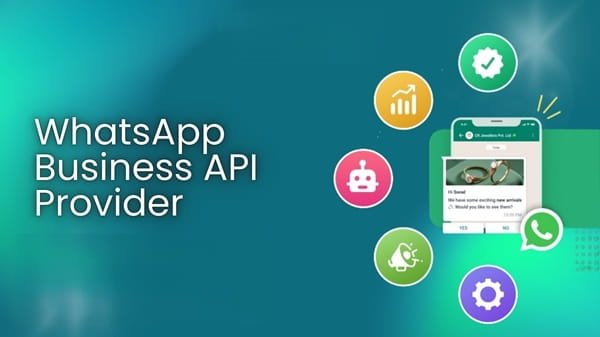
Let’s check out the top 10 WhatsApp Business API providers serving Indian businesses in 2026, with emphasis on integrations, pricing transparency, automation and customer-service operations.
At-a-Glance Comparison
| No. | Provider | Primary Customer | Key Capability |
| 1 | Gupshup | Developers and enterprises | Messaging APIs and integrations |
| 2 | WATI | Sales and support teams | Shared inbox and automation |
| 3 | Interakt | Ecommerce and SMEs | Commerce campaigns and support |
| 4 | AiSensy | Indian marketing teams | Broadcasts and automated flows |
| 5 | Gallabox | Service and sales businesses | No-code workflows and inbox |
| 6 | Zoko | Shopify-oriented merchants | Conversational commerce |
| 7 | 360dialog | Agencies and developers | WhatsApp API infrastructure |
| 8 | Twilio | Developer-led businesses | Programmable omnichannel messaging |
| 9 | Infobip | Multinational enterprises | Messaging and contact-centre integration |
| 10 | DoubleTick | WhatsApp-centric SMB teams | Broadcasts, CRM-style inbox |
1. Gupshup: API Infrastructure for Complex Messaging
Gupshup provides messaging APIs for WhatsApp, including templates, inbound webhooks and interactive messages. It suits businesses integrating customer communications with custom software and transactional systems. Developers can build order updates, notifications and support flows without relying on a ready-made agent interface. The commercial evaluation should separate Meta message costs from Gupshup platform charges and integration expenditure. Confirm webhooks, throughput, template status monitoring, opt-in records and escalation when deliveries fail. An API connection alone does not create a compliant marketing strategy.
2. WATI: Shared Inbox with Automated Workflows
WATI offers WhatsApp team inboxes, campaign tools, integrations and chatbot-style automation. Its plan structure distinguishes features such as included users, automation triggers, API calls and advanced analytics; messaging charges apply. This can suit businesses that need human agents and automated replies in one operational environment. Buyers should test how conversations are assigned, transferred and audited. Confirm costs for extra agents, API limits and template broadcasts before choosing a tier, especially if message volumes fluctuate during festivals.
3. Interakt: Customer Engagement for Online Retail
Interakt is oriented toward Indian businesses using WhatsApp for customer enquiries, ecommerce updates and remarketing. Its tools can link store activity with campaign audiences and shared agent handling, depending on the plan and integrations. Retailers should test abandoned-cart reminders, order tracking, support handoff and correct customer permission records. Avoid assuming a campaign is permitted simply because a phone number appears on an invoice. Review message fees, CRM synchronization, refund communications and the portability of contact records if changing vendors.
4. AiSensy: Campaigns and Indian-Market Pricing
AiSensy combines broadcasts, audience segmentation, chatbots and a multi-agent inbox. Its October 2026 pricing page details subscription tiers and India-messaging rates, but promotions and Meta policy changes make fixed long-term estimates risky. The platform appeals to marketing teams seeking campaign execution without developing every API call. Evaluate audience tags, delivered-message billing, exclusion lists and click-through attribution. Confirm how service conversations, utility templates and agents are charged under the contract, not older marketing brochures.
5. Gallabox: No-Code Communication Operations
Gallabox emphasizes no-code automation, shared inboxes and customer workflows. This is useful for clinics, education providers and service businesses routing leads to different employees. A useful pilot should follow one customer from enquiry through qualification, payment reminder and support resolution. Inspect bot fallback when the customer asks an unexpected question. Providers may advertise automated conversations while still requiring flow design. Review integration charges, staff roles, business-hour routing, privacy controls and the process for exporting conversation history.
6. Zoko: WhatsApp Commerce for Shopify Sellers
Zoko targets ecommerce merchants seeking to convert WhatsApp conversations into orders and support interactions. Shopify-oriented integrations can connect product information, customer communication and order follow-up. The practical test is whether checkout, payment confirmation, fulfilment updates and refunds remain accurate when customers reply to older messages. Merchants should assess subscription tiers, messaging charges, catalogue synchronization and support for multi-agent operations. WhatsApp selling complements a web store; it does not replace proper inventory, payment reconciliation or customer-consent practices.
7. 360dialog: Infrastructure with Agency Flexibility
360dialog supplies WhatsApp Business Platform connectivity used by agencies, integrators and businesses building their own applications. Its documentation separates a recurring channel subscription from Meta messaging fees, with different infrastructure tiers and optional additions. This is useful for organizations that already have a CRM or support system and want direct technical integration. It is less attractive when the buyer needs a ready-made sales interface. Test webhook reliability, ownership of accounts, deployment responsibilities and exit procedures before selecting a channel plan.
8. Twilio: Developer-Led Omnichannel Messaging
Twilio provides programmable WhatsApp messaging alongside SMS and other communications services. Its September 2026 pricing page lists a $0.005 handling fee per WhatsApp message plus applicable Meta charges, subject to updated regional terms. Developers can integrate notifications, authentication and support messages through application infrastructure. Engineering teams must still implement consent, retries, delivery callbacks and fraud protection. Compare total costs with no-code alternatives, particularly if inbound messages, template traffic and customer-service volumes are high.
9. Infobip: Enterprise Customer Communications
Infobip provides enterprise messaging infrastructure and omnichannel customer engagement capabilities, including WhatsApp integrations. It may suit larger organizations coordinating service, sales and notifications across countries or contact centres. Buyers should evaluate routing, data security, approved templates and whether local support meets Indian operating hours. Custom enterprise contracts should clearly identify WhatsApp pass-through fees, platform charges and integration services. Confirm access logs, data-retention policy, business continuity and interoperability with existing customer-support software instead of judging purely by campaign throughput.
10. DoubleTick: WhatsApp-Centric Small Teams
DoubleTick focuses on WhatsApp-led communication for Indian businesses needing campaign broadcasts, customer labels and team access without creating their own developer infrastructure. It can serve smaller sales operations that rely heavily on conversational follow-up. Product suitability depends on whether lead assignment, automation, analytics and extra users are available in the chosen plan. Ask for a live test of opt-out handling, message delivery reports and repeated customer enquiries.
How to Choose a WhatsApp API Provider
- Verify the account: Confirm the approved onboarding route, business ownership, number migration and administrator controls in Meta Business Manager.
- Model message costs: Separate software subscription, Meta charges, provider markup, support, integrations and AI add-ons.
- Respect permissions: Record opt-ins, template category, opt-outs and customer data retention; avoid unsolicited bulk messaging.
- Test real journeys: Measure delivery, human handoff, duplicate messages, template rejection and CRM synchronization.
- Plan portability: Obtain written procedures for exporting contacts, transferring numbers and recovering account access.
Conclusion
The right WhatsApp API partner makes legitimate customer conversations timely, measurable and accountable. Indian businesses should assess messaging costs, account ownership, integrations and service quality before scaling campaigns. Good automation supports helpful communication; it cannot compensate for missing consent or poor customer support. Audit customer consent before campaigning.