An online sale is not complete when a customer clicks Pay. It is complete when money reaches the merchant, the order is reconciled, and any subsequent refund or dispute is resolved. For Indian businesses in 2026, choosing a payment gateway therefore affects conversion, working capital and accounting accuracy as much as checkout design. A headline transaction discount can conceal different charges for cards, international payments, EMI, settlement speed and failed transactions.
Razorpay, Cashfree and PayU compete with bank-connected and commerce-oriented platforms, while larger retailers increasingly need payment routing and reconciliation across providers. These services are not interchangeable: a regulated payment aggregator handles merchant collections and settlements, whereas a technical gateway can route transactions without itself holding funds. Merchants must confirm the RBI-regulated entity named in their contract.
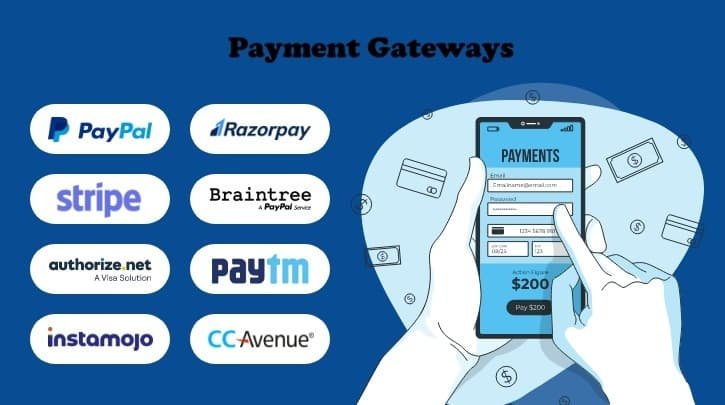
Let’s check out the top 10 payment gateways in India in 2026, with attention to fees, payment success, integration and settlement controls.
At-a-Glance Comparison
| No. | Provider | Primary Strength | Commercial Model |
| 1 | Razorpay | API checkout, subscriptions | Standard transaction fees; introductory offer |
| 2 | Cashfree Payments | Collections, payouts, verification | Promotional and negotiated pricing |
| 3 | PayU | Multimode online payments | Merchant-specific processing rates |
| 4 | PhonePe Payment Gateway | Consumer checkout familiarity | Offer-based and enterprise pricing |
| 5 | Paytm Payment Gateway | Online and offline payment ecosystem | Payment-method-specific pricing |
| 6 | CCAvenue | Broad integrations and payment modes | Published standard rate; custom contracts |
| 7 | BillDesk | Enterprise bill payment | Contract-based pricing |
| 8 | Easebuzz | Collections and business workflows | Quotation or product-based fees |
| 9 | Instamojo | Small seller payment links | Per-transaction pricing |
| 10 | Airpay | Omnichannel merchant payments | Negotiated services and fees |
1. Razorpay: Developer-Friendly Checkout and Collections
Razorpay supports websites and applications through APIs, checkout integrations, payment links, subscriptions and reporting tools. Its standard domestic platform fee is advertised around 2%, with GST on the fee; selected new merchants receive a conditional 90-day offer capped by eligible transaction value. Card categories, international payments and settlement acceleration may be priced differently. Subscription businesses should examine mandate failures, retry logic and customer cancellations. Retailers need to reconcile gross orders, refunds and net deposits instead of equating a payment-success notification with funds received.
2. Cashfree Payments: Collections, Payouts and Verification
Cashfree combines a payment gateway with payout APIs, beneficiary verification and split-payment services. These capabilities are useful for marketplaces and businesses paying many vendors. Its public pricing page includes a time-limited promotional scheme for qualifying new merchants, but transaction limits and eligibility conditions matter more than the advertised zero. Compare ordinary charges after the promotion, payout pricing, settlement cycle and bank-account verification costs. For platform businesses, test whether split settlements match contractual obligations and refund allocation when an order involves several sellers.
3. PayU: Wide Payment-Method Coverage
PayU advertises support for more than 150 payment modes spanning UPI, cards, netbanking, wallets and EMI. Its merchant tools address recurring billing, checkout and payment optimisation, with commercial terms depending on the business and transaction mix. This can suit online education, retail and service businesses with varied customer payment preferences. Buyers should confirm approval rates by bank and instrument rather than accept a single success-rate headline.
4. PhonePe Payment Gateway: Mobile Checkout Reach
PhonePe’s business gateway supports integration with websites, applications and ecommerce platforms. Its published pricing page advertises a limited zero-fee offer with conditions, alongside personalised enterprise plans. Recognition of the consumer app may reduce checkout unfamiliarity, but does not guarantee completed payments. Sellers should measure payment failures, cancellation behaviour, settlements and return handling. Before migration, examine whether subscription payments, international cards, settlement exports and support escalation are available in the contracted tier, rather than assuming every feature of the broader PhonePe ecosystem is included.
5. Paytm Payment Gateway: Omnichannel Collections
Paytm’s All-In-One gateway accepts cards, UPI, wallets and other supported methods through hosted or custom checkout. Its merchant business supplies physical card machines and QR acceptance, useful for merchants operating both stores and websites. Published transaction charges vary by payment source, with stated zero setup and annual maintenance fees for standard gateway integration. Merchants should examine whether online, device and subscription charges are billed separately.
6. CCAvenue: Multi-Method Enterprise Checkout
CCAvenue advertises a standard 2% platform fee for common online payment methods, with 18% GST on applicable fees and custom enterprise arrangements. Additional services, including recurring mandates, tokenisation and some ecommerce plugins, have published charges. Its longstanding integration network can support merchants handling multiple payment modes. Decision-makers should review the schedule, not one headline percentage. Test failed payments, international instrument support, reconciliation file quality and migration effort with the proposed checkout before signing a commercial agreement.
7. BillDesk: Institutional Collection Infrastructure
BillDesk is closely associated with large-scale bill payments and enterprise collections, making it relevant to utilities, insurers, financial institutions and businesses managing recurring invoices. Its value lies in established payment interfaces and reconciliation workflows rather than a self-service bargain tariff for every small online shop. Commercial rates require direct discussion. Procurement teams should request transaction-level reports, clear settlement commitments, integration specifications, dispute procedures and service-level agreements.
8. Easebuzz: Collections Around Operating Workflows
Easebuzz offers payment acceptance alongside business-oriented collection products, links and integration options. Institutions collecting fees and service businesses seeking digital payment requests may find workflows as important as checkout appearance. Fees and capabilities differ by product and merchant category; obtain a written rate card before budgeting. Test how payer references enter accounting records and how partial refunds appear in settlement statements. Businesses managing recurring collections should check mandates and automated reminders rather than assuming a standard payment link creates a subscription system.
9. Instamojo: Payment Links for Small Sellers
Instamojo is designed around easier collection for independent sellers, digital creators and small businesses that may not have developers. Payment links and simple online selling tools can reduce the effort needed to accept a first order. Its transaction-based charges and product limitations should be examined against expected order values. A low-volume business may prefer simple activation over elaborate orchestration, but merchants need reconciliation, inventory connections and staff permissions.
10. Airpay: Multi-Channel Merchant Technology
Airpay provides merchant payment solutions that can support online checkout and collections. It suits organizations seeking a contracted payments partner rather than only a plug-in for a small web store. Evaluate gateway compatibility, supported instruments, chargeback handling and the legal entity responsible for settlement. Request a proof-of-concept with checkout journeys and exportable settlement reports. Customized pricing is meaningful only when paired with measurable uptime targets, implementation responsibilities and a clear support escalation route.
How Merchants Should Choose a Gateway
- Model the real fee: Include MDR or platform charges, GST on fees, refunds, chargebacks, accelerated settlements and international instruments.
- Test payment success: Compare results by issuing bank, device, UPI, cards and actual customer mix.
- Protect reconciliation: Match order IDs, settlement batches, gateway fees and GST invoices against bank deposits.
- Inspect contracts: Verify RBI authorization responsibilities, rolling reserves, prohibited business categories and data handling.
- Plan resilience: Establish backup payment methods, incident support and outage procedures before sales campaigns.
Conclusion
The most suitable gateway is the one that reliably turns legitimate customer intent into reconciled cash. Indian merchants should compare completed-payment rates, total deductions, integrations and support using their transaction data. Promotional pricing can help initially; dependable settlement controls matter throughout the business relationship.