A business summit should create more value than a photograph with a prominent speaker. The right event can open a new market, introduce a manufacturer to an overseas buyer or help a technology company understand procurement requirements. The wrong event consumes registration fees, travel budgets and management time without generating decisions or usable relationships.
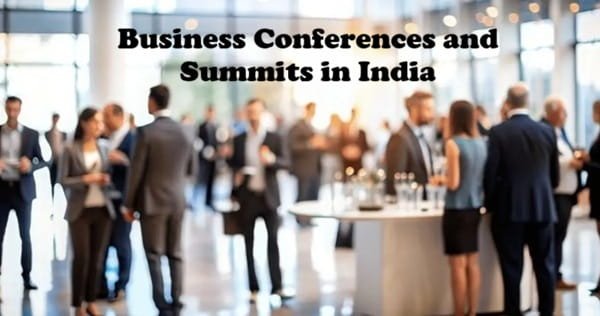
India’s 2026 calendar covers technology policy, semiconductors, life sciences, energy, mobile connectivity and enterprise leadership. These meetings serve different audiences. A biotech startup needs scientific partners and regulated-industry buyers; a manufacturing supplier may benefit more from technical roundtables than broad motivational talks. This guide focuses on events with verifiable 2026 editions, identifies the relevant organizers and distinguishes completed events from those still scheduled. Dates refer to published programmes, not recurring dates guaranteed for future years. Let’s check out the top 10 business conferences and summits in India in 2026.
At-a-Glance Comparison
| No. | Conference / Summit | 2026 Schedule | Primary Audience |
| 1 | India AI Impact Summit | 16–20 February, New Delhi | AI, policy and enterprises |
| 2 | Bengaluru Tech Summit | 17–19 November, Bengaluru | Startups and technology leaders |
| 3 | SEMICON India | 17–19 September, New Delhi | Semiconductor supply chains |
| 4 | India Mobile Congress | 7–10 October, New Delhi | Telecom and digital infrastructure |
| 5 | NASSCOM Technology and Leadership Forum | 24–25 February, Mumbai | Enterprise technology executives |
| 6 | India Energy Week | 27–30 January, Goa | Energy companies and suppliers |
| 7 | BioAsia | 17–18 February, Hyderabad | Pharma, biotech and investors |
| 8 | ET NOW Global Business Summit | 13–14 February, New Delhi | Corporate and policy leaders |
| 9 | CII Industry–Academia Partnership Summit | 27 November, New Delhi | R&D and industrial innovation |
| 10 | India Internet Governance Forum | 30 November, Chennai | Digital policy stakeholders |
1. India AI Impact Summit: Responsible AI and Deployment
The government-backed India AI Impact Summit ran from 16 to 20 February at Bharat Mandapam, New Delhi, with leaders’ discussions, research sessions and an accompanying expo. Its themes included people, planet and progress, with attention to inclusive AI and deployment in public services. Companies could examine policy direction and potential partnerships rather than expect direct procurement commitments. Participants planning future editions should distinguish announcements from implemented programmes, verify data governance rules and follow up with technical decision-makers after initial introductions.
2. Bengaluru Tech Summit: Technology and Investment Networks
The Karnataka-supported Bengaluru Tech Summit is scheduled for 17–19 November 2026 at the Bangalore International Exhibition Centre under the theme AI & Beyond. The event is relevant for product demonstrations and ecosystem access, especially where emerging technology intersects with enterprise demand. Exhibitors should identify target buyers before purchasing space, prepare credible demonstrations and calculate travel and follow-up costs. Published attendance ambitions are not evidence of confirmed commercial leads.
3. SEMICON India: Building Chip Supply Chains
SEMICON India took place from 17 to 19 September at Yashobhoomi, New Delhi, jointly organized by the India Semiconductor Mission and SEMI. Smaller suppliers can use such meetings to learn qualification requirements, but winning contracts requires testing, reliability and manufacturing readiness. Distinguish facilities already producing commercially from approved projects that remain under construction or commissioning.
4. India Mobile Congress: Communications and Emerging Technology
The Department of Telecommunications and Cellular Operators Association of India organized India Mobile Congress from 7 to 10 October at Yashobhoomi. Its 2026 theme was Scale Without Boundaries. The programme brought together telecom providers, equipment firms, developers and policymakers discussing connectivity, AI, cybersecurity and new industrial applications. Companies should distinguish demonstrations from deployed networks and evaluate interoperability, spectrum rules and cybersecurity obligations. For B2B exhibitors, a qualified network-operator meeting may matter more than general footfall.
5. NASSCOM Technology and Leadership Forum: Enterprise Decisions
The 2026 NASSCOM Technology and Leadership Forum ran on 24–25 February at Fairmont, Mumbai. Its focus included leadership, intelligent technologies and the changing global business environment. CIOs, IT services firms and enterprise software providers can use the forum to discuss AI adoption, risk and operating models. The most useful takeaway is an implementation question: what costs, controls and measurable benefits would a new system create? Buyers should verify speaker claims and secure technical follow-up before making investment decisions.
6. India Energy Week: Investment and Industrial Transition
India Energy Week took place in Goa from 27 to 30 January, supported by the Ministry of Petroleum and Natural Gas and industry organizers. It brought energy executives, government representatives and suppliers together around energy security, affordability and decarbonisation. Engineering firms can investigate equipment needs across conventional and emerging energy. However, hydrogen, carbon capture and new fuels involve project-specific economics and regulation. Assess signed offtake, permitting and capital commitments separately from conference-stage investment intentions.
7. BioAsia: Life-Sciences Commercial Partnerships
Telangana’s BioAsia convened participants in Hyderabad on 17–18 February 2026, drawing pharmaceutical, biotechnology, healthcare and research stakeholders. Young companies can seek licensing contacts, manufacturing partners and specialist investment discussions. Because therapeutic products face demanding approval pathways, scientific credibility is essential. Prepare evidence of intellectual property, clinical or laboratory progress, regulatory milestones and addressable demand. Networking does not substitute for validated product safety or approved studies.
8. ET NOW Global Business Summit: Macro Strategy and Leadership
The ET NOW Global Business Summit returned to New Delhi on 13–14 February, bringing senior executives and policymakers together for discussions on global economic change, governance and industrial strategy. Its value lies in broad perspectives and access to leadership conversations rather than product-specific selling. Corporate strategy teams should use sessions to identify uncertainty around trade, technology and capital allocation. Public remarks are perspectives, not company guidance or binding government notifications; verify consequential statements against primary disclosures and official policy publications.
9. CII Industry–Academia Partnership Summit: Commercializing Research
The Confederation of Indian Industry scheduled its Global Summit on Industry–Academia Partnership for 27 November at The Lalit, New Delhi. The focus is connecting university research, industrial demand, entrepreneurial development and commercialization. A worthwhile meeting should establish deliverables: technology-readiness level, testing facilities, intellectual-property ownership and funding responsibilities. Letters of intent alone do not prove that a laboratory solution can survive factory conditions.
10. India Internet Governance Forum: Digital Policy Dialogue
The India Internet Governance Forum convenes stakeholders from technology, civil society, academia and public institutions to discuss the development and governance of the internet. Its agenda is relevant to digital companies facing challenges around access, online safety, trust and emerging technologies. Its 2026 meeting is scheduled for 30 November at IIT Madras Research Park, Chennai; delegates should confirm workshop access and programme updates before travel. The forum is best viewed as a policy and stakeholder dialogue, not a conventional sales exhibition or source of guaranteed commercial leads.
How to Make Business Events Worthwhile
- Define outcomes: Target buyers, investment contacts, technical partners or regulatory insights rather than undefined networking.
- Verify schedules: Confirm dates, venue, ticket access and invited participants with organizers before spending.
- Plan targeted meetings: Research counterparties, send introductions and prepare a concise evidence-backed capability note.
- Budget fully: Include tickets, exhibition space, travel, demonstration equipment and follow-up time.
- Track results: Record qualified contacts, proposals, completed pilots and decisions after the event.
Conclusion
India’s leading conferences offer access to distinct industrial and technology communities. Choose the summit where its speakers, buyers and working sessions match a live business objective, and evaluate progress through concrete follow-up rather than publicity or attendance figures.