A crowded marketplace can deliver thousands of orders yet leave sellers short of cash. In 2026, merchants face rising advertising costs, delivery expectations, and returns that consume margins after checkout. Choosing a selling channel is therefore a decision about contribution profit, not just customer traffic.
Amazon and Flipkart offer nationwide discovery and managed warehouses. Meesho targets price-sensitive demand; fashion and beauty specialists provide curated audiences. Shopify takes a different approach: sellers operate their own storefront and must generate their own traffic. Meanwhile, ONDC connects sellers through participating network applications rather than functioning as another conventional marketplace.
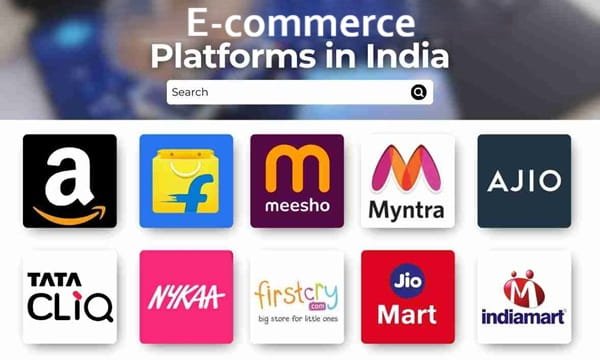
Automation helps reconcile inventory, GST invoices, and orders across channels, although software cannot eliminate stockouts or settlement disputes. This assessment compares ten platforms by onboarding, fees, logistics, and realistic seller advantages. Rankings are editorial, not official market-share standings; contractual rate cards prevail over headline offers.
Quick Summary
| Rank | Platform | Category Focus | Fee or Commission Model | Merchant Advantage |
| 1 | Amazon India | General merchandise | Category referral, closing, shipping | FBA; export access |
| 2 | Flipkart | Electronics, fashion, home | Eligible zero commission; other charges | FBF; regional reach |
| 3 | Meesho | Value fashion, household | Zero commission; logistics and returns | Low-cost entry |
| 4 | Myntra | Fashion, lifestyle | Negotiated seller commercials | Fashion-focused discovery |
| 5 | AJIO | Fashion, lifestyle | Negotiated margin plus shipping | Reliance retail reach |
| 6 | Nykaa | Beauty, wellness | Brand-specific commercial terms | Beauty-focused demand |
| 7 | JioMart | Grocery, general retail | Seller-specific contractual pricing | Local distribution |
| 8 | Shopify India | Brand-owned D2C | Subscription and payment fees | Customer relationship control |
| 9 | Tata CLiQ / Neu | Premium lifestyle | Negotiated marketplace terms | Curated positioning |
| 10 | Snapdeal | Value home, lifestyle | Offer-specific fees; verify terms | Budget-segment buyers |
1. Amazon India: General Merchandise and Managed Fulfilment
Amazon offers Seller Central listings, advertising, Easy Ship, Self Ship, and Fulfilment by Amazon (FBA), which stores, picks, packs, and dispatches inventory. Its 2026 rate card sets zero referral fees for numerous eligible products priced up to ₹1,000; closing, weight-handling, and storage fees can apply. September’s closing-fee increase underscores why sellers must use the live profitability calculator. Amazon Global Selling offers separate export pathways, requiring destination-country compliance and shipping economics.
2. Flipkart: Electronics, Fashion, and Regional Reach
Flipkart provides access to strong electronics, appliance, and fashion demand, with Fulfilment by Flipkart (FBF) for warehousing and dispatch or non-FBF seller-side packing. Its November 2025 zero-commission policy covered products below ₹1,000; July 2026 expanded zero commission to fashion at every price. Fixed, shipping, returns, and advertising costs remain relevant. Test FBF against dispatching locally: faster delivery may increase conversion but adds inventory placement and storage exposure.
3. Meesho: Budget Commerce with Zero Commission
Meesho charges zero seller commission, registration, and collection fees, making it attractive to small manufacturers serving budget-conscious towns. Logistics partners collect parcels from sellers, who manage packing and inventory. Crucially, undelivered return-to-origin (RTO) shipments incur no additional return-shipping fee, while customer-initiated returns can attract weight-based charges. Sellers should calculate actual return percentages, shipping GST, advertising, and product damage before treating zero commission as zero selling cost.
4. Myntra: Curated Fashion and Brand Presentation
Myntra concentrates shoppers looking for apparel, footwear, accessories, and established lifestyle labels. Its partner portal accepts applications and states that sellers should not pay onboarding deposits. Acceptance involves brand documentation and commercial approval; publicly advertised percentage commissions cannot substitute for the signed agreement. Fashion fulfilment choices and campaign participation influence margins, particularly when sizes create exchanges or returns. Track average order value (AOV), markdown contributions, and net realization by style.
5. AJIO: Reliance-Backed Fashion Distribution
AJIO Commerce accepts authorised brands and distributors across fashion and lifestyle categories. Onboarding requires regular GSTIN, PAN, banking information, and trademark or brand-authorisation evidence. Its official seller guidance describes negotiated category margins, shipping costs, and GST instead of one universal commission. Certain arrangements place warehousing, packing, delivery, and returns with AJIO. Sellers should confirm their exact inventory-ownership model, payment timetable, promotional deductions, and return responsibilities before allocating stock.
6. Nykaa: Beauty-Led, Authenticity-Focused Retail
Nykaa’s beauty marketplace and retail network attract shoppers seeking cosmetics, skincare, personal care, and wellness products. Brands apply through its dedicated partnership route; acceptance is selective rather than automatic. Commercial arrangements can involve wholesale supply or marketplace participation, so comparing quoted margins as uniform commissions is misleading. Inventory provenance, batch traceability, expiry dates, and compliant product claims matter. Sellers should budget for sampling, visibility campaigns, and slow-moving shades as carefully as freight.
7. JioMart: Grocery and Local Distribution Opportunities
JioMart combines general retail with Reliance’s store and distribution presence. A functioning seller portal accepts onboarding enquiries, but published public information does not support a universal commission tariff or guaranteed access to local fulfilment. Merchants should establish whether inventory is supplied wholesale, sold through a marketplace account, or fulfilled under another arrangement. Grocery sellers must assess shelf life, cold-chain handling, fulfilment radius, wastage, and settlement deductions before committing capacity.
8. Shopify India: Controlled D2C Storefronts
Shopify is storefront software, not an audience-providing marketplace. Its published annual-billing Basic plan costs ₹1,499 monthly and lists a 2% third-party payment-provider transaction fee, separate from gateway charges. Indian merchants can integrate supported providers such as Razorpay; logistics and advertising remain their responsibility. Customer relationships and site merchandising stay under merchant control, subject to privacy obligations. ONDC discovery requires an appropriate seller-network integration, not merely a Shopify subscription.
9. Tata CLiQ and Tata Neu: Premium Brand Placement
Tata CLiQ emphasizes curated fashion, lifestyle, and premium shopping, while Tata Neu links customers to Tata-group commerce services. Sellers should not assume one universal onboarding contract across these properties. Tata CLiQ’s agreement supports omnichannel arrangements involving approved physical stores, but technical integration and operating obligations can be substantial. The platform suits authorised brands seeking positioning rather than the cheapest fulfilment. Confirm commissions, promotional funding, returns, warehouse requirements, and loyalty-related settlement terms individually.
10. Snapdeal: Value-Oriented Seller Acquisition
Snapdeal targets price-conscious shoppers, particularly for household, fashion, and everyday products. Its seller onboarding portal promotes zero-commission selling subject to conditions; merchants should request the applicable schedule instead of assuming every SKU is free. Other costs may include logistics, payment collection, packaging, or promotions. Simpler entry can appeal to smaller distributors, but category competitiveness requires pricing. Verify product-safety certifications, dispatch performance, RTO costs, and payment schedules before scaling listings.
Strategic Matrix: Building a Profitable Platform Stack
- Mass-market electronics and home: Compare Amazon and Flipkart on contribution profit after shipping, advertising, returns, and storage.
- Budget products: Trial Meesho with limited catalogue; monitor customer returns separately from undelivered RTO parcels.
- Premium fashion and beauty: Seek approval from Myntra, AJIO, or Nykaa only when brand documentation and margins justify curation.
- Owned D2C: Use Shopify for repeat purchases and customer relationships; include customer acquisition cost (CAC) and payment fees.
- Operations: Reconcile inventory, GSTIN details, invoices, payouts, and order-level exceptions in a multichannel dashboard. Explore ONDC through verified seller-network participants and assess same-day delivery locally, not nationally.
Conclusion
There is no universally cheapest selling platform. The right combination depends on product economics, customer intent, fulfilment reliability, and cash conversion. Run controlled channel experiments, inspect settlements, and build an owned audience alongside selective marketplace distribution. Sustainable growth comes from retained margins and dependable service, not gross order counts.