Choosing between fixed and floating home loan interest rates is an important decision when buying a house in India. The interest rate affects your monthly EMI, total repayment amount, and ability to manage long-term finances. Even a small change in the interest rate can make a noticeable difference when you borrow a large amount for 15, 20, or 30 years.
A fixed interest rate offers greater certainty because the applicable rate remains unchanged for the agreed period. A floating interest rate, on the other hand, changes according to the lender’s benchmark and prevailing market conditions. It may reduce your borrowing cost when rates fall, but it can also increase your EMI or extend your repayment tenure when rates rise.
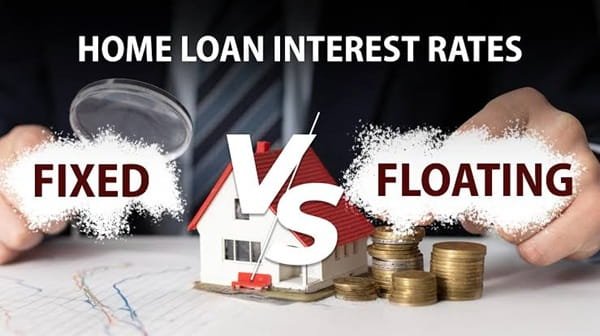
Neither option is automatically better for every borrower. Your decision should depend on your income stability, risk tolerance, loan tenure, financial goals, and the terms offered by the lender. Understanding the differences can help you choose a home loan that suits your circumstances.
What Is a Fixed Home Loan Interest Rate?
A fixed home loan interest rate remains unchanged for the period specified in the loan agreement. Your interest rate does not automatically increase or decrease when market interest rates change during that period.
For example, if you borrow ₹40 lakh at a fixed interest rate of 8% per annum, the agreed rate generally remains the same throughout the applicable fixed-rate period.
The main advantage is predictability. You can estimate your EMI and plan your monthly budget without worrying about routine market-driven interest rate changes.
However, check whether the lender offers a fixed rate for the entire loan tenure or only for an initial period. Some products described as fixed-rate loans may allow the rate to change under specified contractual conditions. A fixed rate may also be higher than the floating rate available when you apply.
What Is a Floating Home Loan Interest Rate?
A floating home loan interest rate changes according to the lender’s applicable benchmark and the terms of the loan agreement. In India, floating-rate loans are linked to the relevant external benchmark or another applicable pricing mechanism, depending on the lender and loan product.
When the applicable benchmark or lending rate decreases, your interest rate may fall. When it increases, your borrowing cost may rise.
For example, if your floating home loan rate is initially 8.5% per annum and the applicable rate later falls, your lender may reduce the rate according to the loan terms. Conversely, a rate increase may raise your EMI or extend your repayment period.
Floating rates are generally more exposed to market movements, but they can offer savings when interest rates decline.
Fixed vs Floating Home Loan Interest Rates: Key Differences
| Factor | Fixed Interest Rate | Floating Interest Rate |
| Interest rate | Remains fixed for the agreed period | Changes according to the applicable benchmark and loan terms |
| EMI predictability | Generally higher | May change over time |
| Benefit from rate cuts | Usually limited during the fixed period | May benefit when rates decline |
| Risk when rates rise | Lower during the fixed period | EMI or tenure may increase |
| Budget planning | Easier | Requires flexibility |
| Initial rate | May be higher, depending on the offer | May be lower, depending on market conditions |
| Best suited for | Borrowers prioritising payment certainty | Borrowers comfortable with rate fluctuations |
Actual loan terms vary by lender. Always compare the written offer rather than assuming that every fixed or floating product follows identical conditions.
Which Option Offers Lower Total Interest?
The total interest paid depends on the interest rate, loan amount, repayment tenure, and future rate movements.
A fixed-rate loan can be beneficial if market interest rates rise significantly after you borrow. Your agreed rate may remain unchanged during the fixed period, protecting you from those increases.
A floating-rate loan may be more economical if interest rates decline over time and the lender passes on the reduction according to the applicable terms.
However, no borrower can reliably predict the entire interest rate cycle over a 20- or 25-year loan tenure. A floating rate that is cheaper initially may become more expensive later, while a fixed rate that seems costly today may provide protection against future increases.
Compare the lender’s current rate, applicable fees, fixed-rate conditions, and possible changes in repayment obligations before deciding.
Advantages and Disadvantages of Fixed Interest Rates
Fixed rates are useful for borrowers who want predictable repayments and have limited room in their monthly budget.
Advantages
- Greater certainty about the applicable interest rate.
- Easier household budgeting and financial planning.
- Protection against market-driven rate increases during the fixed period.
- Less uncertainty for borrowers who prefer stable financial commitments.
Disadvantages
- The initial rate may be higher than a floating-rate offer.
- You may not benefit immediately when market rates decline.
- The fixed period may be shorter than the full loan tenure.
- Contractual conditions may permit rate changes in specified circumstances.
Before selecting a fixed-rate loan, confirm exactly how long the rate remains fixed and whether any conversion or switching charges apply.
Advantages and Disadvantages of Floating Interest Rates
Floating rates can be attractive to borrowers who can manage changes in their monthly financial commitments.
Advantages
- Potential savings when applicable interest rates decline.
- The possibility of benefiting from lower rates without refinancing.
- Flexibility for borrowers who can accommodate changing EMIs or tenures.
- Potentially competitive initial pricing, depending on the lender and market.
Disadvantages
- Interest rates may rise, increasing borrowing costs.
- Monthly budgeting can become more difficult.
- A rate increase may extend the repayment tenure if the EMI remains unchanged.
- Borrowers need to review their loan periodically and plan for possible changes.
A floating-rate loan is not necessarily cheaper over the entire repayment period. Its eventual cost depends on how rates move and how the lender adjusts the loan.
How to Choose the Right Interest Rate for Your Home Loan
Consider your financial situation before selecting a rate type.
Choose a fixed rate if predictable repayments are a priority, your monthly budget is tight, or you are uncomfortable with interest rate uncertainty. Make sure the fixed period and associated conditions are suitable for your expected loan tenure.
A floating rate may be appropriate if you have a stable income, sufficient savings to manage potential EMI increases, and the flexibility to accommodate changing interest rates.
Also consider your expected holding period. If you plan to repay the loan early, review the lender’s applicable prepayment and foreclosure conditions. Compare the annual percentage rate or other disclosed borrowing-cost information, processing fees, and switching terms where relevant.
Finally, check whether the lender permits a switch between fixed and floating rates and what charges apply. Do not assume that changing rate types will always be free or financially beneficial.
Conclusion
Fixed and floating home loan interest rates offer different advantages. Fixed rates provide greater certainty during the agreed fixed period, while floating rates offer the possibility of savings when market rates decline. Both carry trade-offs, and neither guarantees the lowest total interest cost.
The right choice depends on your repayment capacity, tolerance for uncertainty, and the specific terms offered by the lender. Compare the complete loan costs, understand how rate changes affect your EMI and tenure, and choose an option that remains manageable even if your financial circumstances change.
Frequently Asked Questions
Q. Is a fixed home loan interest rate better than a floating rate?
A fixed rate may be better for borrowers who prioritise predictable repayments. A floating rate may suit those who can manage interest rate changes and want the possibility of benefiting from rate cuts.
Q. Can a floating home loan interest rate increase?
Yes. If the applicable benchmark or lending rate increases, your loan’s interest rate may rise according to the agreement. This can increase your EMI or extend your repayment tenure.
Q. Can I switch from a fixed home loan to a floating rate?
Some lenders allow borrowers to switch between rate types, subject to their policies and contractual conditions. Check the applicable fees and terms before requesting a conversion.
Q. Which home loan interest rate is better for a long tenure?
There is no universally better option for a long-tenure loan. Fixed rates offer certainty during the fixed period, while floating rates may become more or less expensive depending on future rate movements.
Q. Should I choose a fixed or floating rate if interest rates are expected to fall?
A floating rate may allow you to benefit from rate reductions, provided the lender passes them on under the loan terms. However, forecasts are uncertain, so consider affordability and risk rather than relying only on expected rate cuts.